 Veteran owned business

Blog
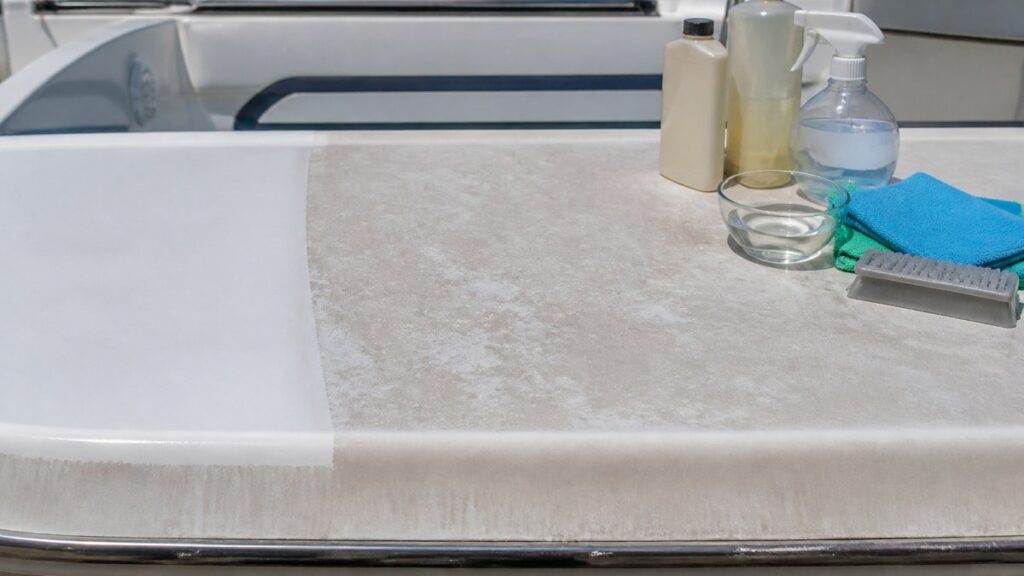
Can You Remove Boat Gel Coat Oxidation Without Buffing?
Nov
Last Updated: October 26, 2026
Quick Summary
Yes, you can remove light to moderate gel coat oxidation by hand, without a buffer. Start with a gentle cleaner-restorer or oxidation remover applied by hand, test a small square first, and move to a stronger compound only if the test patch does not improve.
- Wash and dry the hull first to remove salt, dirt, and grime.
- Test a 1-foot square and start with the gentlest method that could work.
- Work in 2-foot sections with 5 to 8 pounds of pressure, wiping residue before it dries.
- Stop abrasive work if the cloth picks up colored gel coat instead of white chalk.
- Use wet sanding only for heavy oxidation, and only on gel coat thick enough to lose some.
Table of Contents
- What Gel Coat Oxidation Is and Why It Happens
- How to Assess Oxidation Severity Before You Start
- Preparing the Hull: Washing and Removing Surface Contaminants
- 7 Ways to Remove Oxidation Without a Buffer
- 1. Hand-Applied Oxidation Remover With a Microfiber Cloth or Foam Pad
- 2. Cleaner-Restorer Applied by Hand With a Non-Abrasive Sponge
- 3. Hand Polishing Compound Worked in Circular Motions
- 4. Fine Abrasive Compound Applied by Hand
- 5. Wet Sanding With Fine-Grit Sandpaper
- 6. Oxidation Remover Paired With a Foam Applicator Pad
- 7. Repeated Light Passes With a Mild Restorer
- Choosing a Gel Coat Oxidation Remover for Boats
- Limits and Risks of Non-Buffing Methods
- Will Vinegar Remove Oxidation From Fiberglass?
- How to Restore Faded Boat Gel Coat Step by Step
- Frequently Asked Questions
What Gel Coat Oxidation Is and Why It Happens
Gel coat oxidation is the chalky, faded layer that forms on a fiberglass boat’s outer surface when sunlight breaks down the resin. Many cases can be handled without a power buffer. Gel coat is the glossy outer shell of a fiberglass boat, and it is thin enough that UV light and salt air wear it down over time.
Oxidation shows up as a dull, pinkish, or powdery film. You can often see it when you rub a white cloth across the hull and it comes away with a chalky residue. Sun exposure, heat, and neglect speed up the process.
- Boats stored outdoors in full sun oxidize fastest
- Dark-colored hulls heat up more and often fade sooner
- Infrequent washing lets salt and grime wear the surface down
How to Assess Oxidation Severity Before You Start
Before you pick a method, check how bad the oxidation is. Wipe a small test area with a clean white cloth. If the cloth picks up light residue, the oxidation is mild. If the surface looks chalky and the color is noticeably washed out, it is moderate to heavy.
Test one spot first. Start with the gentlest method and move up only if needed. This saves you from removing more gel coat than you need to.
Preparing the Hull: Washing and Removing Surface Contaminants
Clean the hull before any treatment. Wash it with a mild boat soap and fresh water to lift salt, dirt, and grime. Rinse well and let the surface dry completely.
Contaminants left on the gel coat can scratch the surface during hand application. Work in shade and avoid direct sun, since heat can cause products to dry too fast and leave streaks.
7 Ways to Remove Oxidation Without a Buffer
These seven methods are all hand-applied, no rotary polisher, no dual-action buffer, no wool pad on a drill. They are ordered from gentlest to most aggressive. Match the method to your oxidation level, test a 1-foot square first, and move up only if the test patch does not improve.
1. Hand-Applied Oxidation Remover With a Microfiber Cloth or Foam Pad
Best for: light oxidation (chalky residue on a white cloth, color still visible).
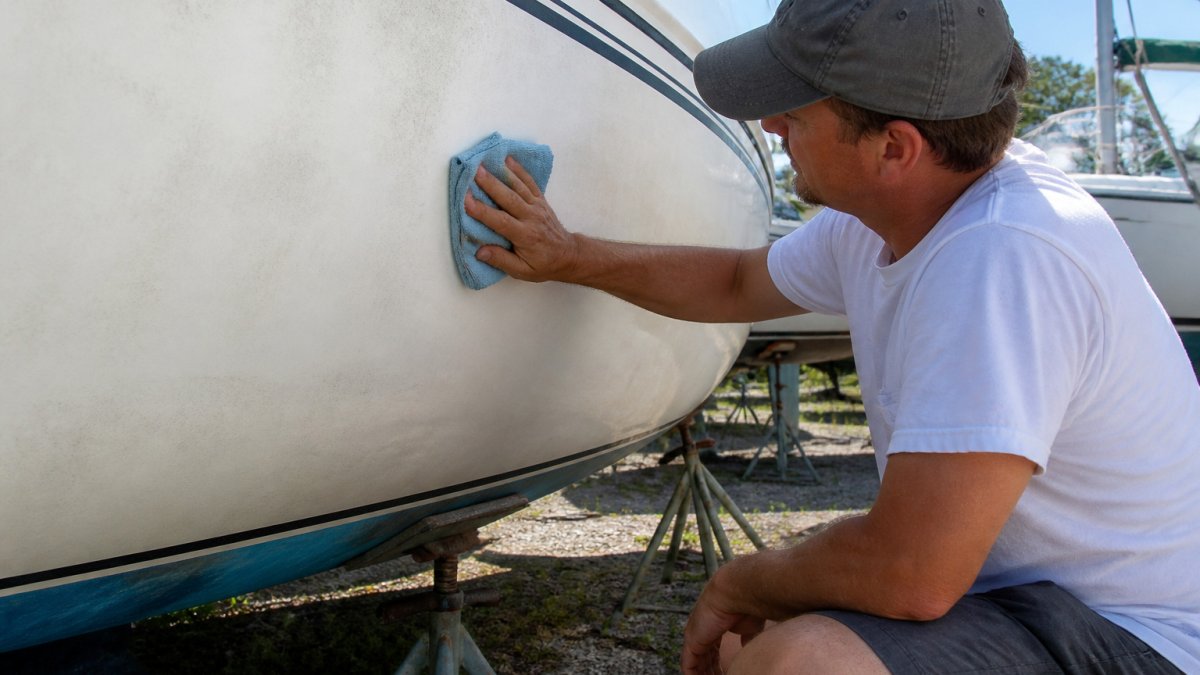
Apply a nickel-sized amount of oxidation remover to a clean microfiber cloth or a soft foam pad. Work a 2-foot by 2-foot section using firm, overlapping strokes, about 5 to 8 pounds of pressure, roughly the pressure you would use to spread cold butter. Keep the product wet; if it flashes dry, you are working too large an area or too long. Wipe the residue with a fresh microfiber before it dries, then inspect the section in raking light. Limit yourself to two passes per section per session.
Fold your microfiber into quarters and rotate to a clean face every section. A loaded cloth just smears oxidized residue back into the gel coat.
2. Cleaner-Restorer Applied by Hand With a Non-Abrasive Sponge
Best for: mild fading and light chalking where you want the least aggressive first step.
Wet a non-abrasive sponge (a grout sponge or a soft marine sponge, not a Scotch-Brite pad) with a gel coat cleaner-restorer. Squeeze out excess so the sponge is damp, not dripping. Scrub in 18-inch sections with light pressure, 2 to 3 pounds, using straight passes rather than circles. Let the product dwell 30 to 60 seconds, then rinse with fresh water before it dries. This method lifts the oxidized layer chemically and mechanically without cutting gel coat. Expect to repeat two to three times on moderate fading.
3. Hand Polishing Compound Worked in Circular Motions
Best for: moderate oxidation where the surface still has some shine underneath the chalk.
Put a pea-sized amount of polishing compound on a clean microfiber cloth or a soft foam applicator. Rub in 6- to 8-inch circles with steady, moderate pressure, 5 to 7 pounds, and keep the compound wet. Work one 2-foot section at a time, then buff off the haze by hand with a clean, dry microfiber. Circular motion gives more even results than straight strokes on curved surfaces. Two to three passes per section is typical. Polishing compound is less aggressive than an abrasive compound, so it removes less gel coat per pass, but it also removes less oxidation, which is why it suits moderate rather than heavy cases.
4. Fine Abrasive Compound Applied by Hand
Best for: moderate to heavy oxidation where polish alone leaves the surface dull.
A fine abrasive compound cuts more oxidation than a polish, and it also removes measurable gel coat. Apply it sparingly, a dime-sized amount per 2-foot section, to a clean foam applicator or microfiber. Work in short sections with 6 to 8 pounds of pressure, and stop as soon as the color looks even and the shine starts to return. Do not exceed two passes per section in a single session. Watch the cloth: if it picks up colored gel coat rather than white chalk, you are cutting into the gel coat itself and should stop.
Abrasive compounds can thin gel coat in a single aggressive pass, especially on older hulls or near edges, chines, and fittings. Test a small area and check the cloth color before committing to a whole panel.
5. Wet Sanding With Fine-Grit Sandpaper
Best for: heavy, failed oxidation where hand compounds will not bring back color, and only if you accept that it removes gel coat.
Wet sanding is the most aggressive hand method. Use 1000- to 1500-grit wet-or-dry sandpaper, soak it in fresh water for at least 10 minutes, and keep a trickle of water running over the surface as you sand. Sand lightly in one direction, not circles, with 2 to 3 pounds of pressure, checking every few strokes. Follow with a polishing step to restore gloss. If sanding leaves chips or thin spots, a complete gel coat repair kit can help fix them.
6. Oxidation Remover Paired With a Foam Applicator Pad
Best for: light to moderate oxidation on large, flat areas where you want even product spread.
Load a foam applicator pad (a 5- to 6-inch hand pad works well) with oxidation remover and work it over the surface in overlapping passes, about 50 percent overlap. Use 4 to 6 pounds of pressure and keep the pad moving. Flip or replace the pad every two or three sections so you do not spread residue back onto the hull. This method is essentially method 1 with better ergonomics for big flat panels like the hull sides and transom.
7. Repeated Light Passes With a Mild Restorer
Best for: owners who want a gentle, controlled result and are willing to trade time for safety.
Use a mild restorer and make several light passes instead of one heavy one. Each pass removes a thin layer, which keeps the risk of over-removal low. Apply with a soft foam pad or microfiber, 3 to 4 pounds of pressure, and wipe off between passes. Three to five light passes are typical for moderate oxidation.
Aggressiveness ranking, gentlest to most aggressive: cleaner-restorer (method 2) → mild restorer (method 7) → oxidation remover by hand (methods 1 and 6) → polishing compound (method 3) → fine abrasive compound (method 4) → wet sanding (method 5). Start low and only move up when a test patch stalls.
Watch out: wet sanding and abrasive compounds can thin the gel coat in one pass. Always test a small area first, and stop if the cloth picks up color rather than white chalk.
Choosing a Gel Coat Oxidation Remover for Boats
Pick a remover based on two things: how bad the oxidation is, and how much gel coat you are willing to remove. The table below is a decision guide, not a product list, the right category matters more than the brand.
| Oxidation level | What you see | Start with | Avoid |
|---|---|---|---|
| Mild | Light chalk on a white cloth; color still visible | Cleaner-restorer (method 2) or mild restorer (method 7) | Abrasive compounds, wet sanding |
| Moderate | Chalky surface, washed-out color, some shine underneath | Oxidation remover by hand (methods 1 and 6) or polishing compound (method 3) | Wet sanding on a first attempt |
| Heavy | Thick chalk, color gone, surface feels rough | Fine abrasive compound (method 4), then wet sanding (method 5) only if needed | Repeated aggressive passes without a test patch |
| Failed / thin gel coat | Cracks, visible fiberglass, previous repairs | Professional assessment; consider gel coat repair rather than removal | Any abrasive or sanding step |
Look for products made for fiberglass and gel coat, and read the label for application instructions and any warnings about clearcoat or painted surfaces. Once oxidation is removed, you can restore the finish with a matching clear or colored gel coat. Marine Coat One offers custom color matching services.
Buy the smallest size of the gentlest product that will do the job, test it on a 1-foot square, and only then buy the larger size or the next step up. This avoids ending up with a gallon of abrasive compound you did not need.
Limits and Risks of Non-Buffing Methods
Hand methods take more time and effort than machine buffing. They also may not fully restore very heavy oxidation. Over-aggressive hand work can thin the gel coat, so keep pressure light and check your progress often.
Will Vinegar Remove Oxidation From Fiberglass?
Vinegar can clean away light surface grime, but it is not a reliable oxidation remover. It does not cut through chalky gel coat the way a dedicated oxidation remover does. Use a product made for fiberglass instead, and check the label before using any household cleaner on your hull.
How to Restore Faded Boat Gel Coat Step by Step
- Wash and dry the hull completely.
- Test a small area with the gentlest method.
- Apply your chosen remover or cleaner by hand in small sections.
- Wipe away residue before it dries.
- Check for even color and shine.
- Protect the surface with a finish suited to your gel coat.
If the gel coat is too faded to restore, a custom color gel coat matched to your boat’s exact shade may be the better route. Marine Coat One’s custom color gel coat is matched to the exact color and available with or without wax.
Frequently Asked Questions
How do you get oxidation out of gel coat?
Start by washing and drying the hull, then test a small area with a mild oxidation remover or fine polishing compound applied by hand. Use a clean microfiber cloth in overlapping circular motions, wipe residue away before it dries, and check the result in good light. Stop if the gel coat begins to look thin or dull through the cloth.
What is the best gel coat oxidation remover for boats?
The best choice depends on how far the oxidation has progressed. For light chalking, consider a cleaner-restorer designed for fiberglass; for heavier oxidation, consider a more abrasive compound. Look for products labeled for marine gel coat and read the instructions for hand application. Pricing varies by size and retailer, so check Marine Coat One’s website for current prices and quantity options before buying.
Can you remove boat gel coat oxidation by hand?
Hand application is one approach described for light to moderate oxidation. It takes more time and effort than machine polishing. Work in small sections, keep the surface cool and out of direct sun, and inspect your progress frequently. If the chalking persists after several careful passes, a machine may be needed.
Will vinegar remove oxidation from fiberglass?
Vinegar is not a reliable oxidation remover for gel coat. For actual oxidation, use a product made for marine gel coat, and rinse thoroughly after any acidic cleaning step.
