 Veteran owned business

Blog
How Often to Polish a Boat Hull: A Practical Schedule
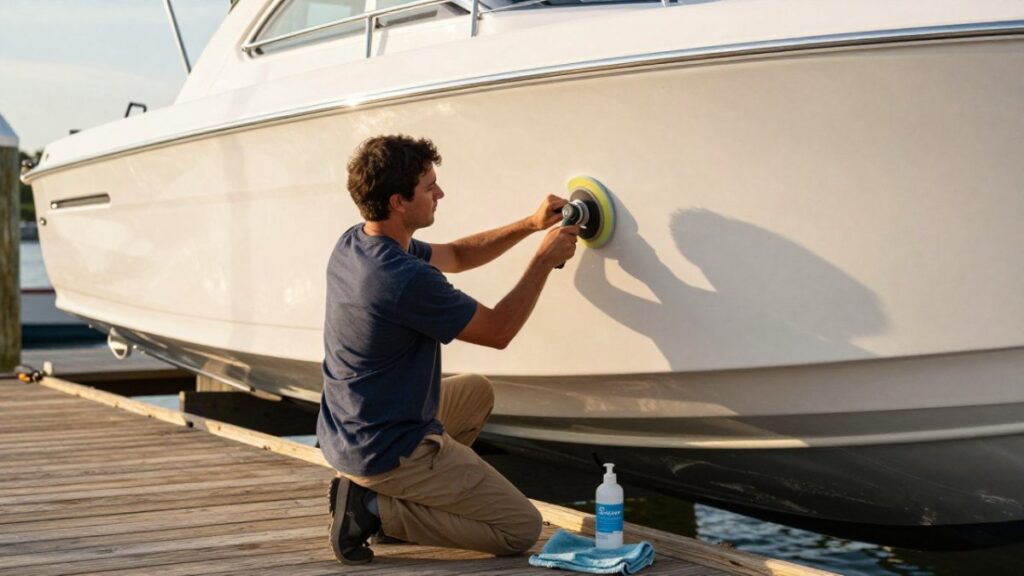
Nov
Quick Summary
Most boat owners should polish a boat hull once or twice a year, with a wax or sealant refresh every three to four months. Boats kept in salt water or constant sun usually need polishing more often than boats stored under cover.
- Polish once or twice a year for most boats kept in the water.
- Refresh wax or sealant every three to four months.
- Saltwater use and open storage call for two to three polishes a year.
- Polish when water stops beading or the hull looks chalky or dull.
- Compound only for heavy oxidation, since it removes gelcoat each pass.
Table of Contents
- How Often to Polish a Boat Hull for Most Owners
- Polishing vs. Waxing vs. Compounding: What Each Does
- Signs Your Hull Needs Polishing Now
- How Sun, Salt Water, and Climate Change Your Schedule
- How to Restore Faded Gelcoat and Remove Oxidation
- How Often to Wax a Boat Between Polishing Sessions
- Choosing Your Polishing Schedule and Next Step with Marine Coat One
- Frequently Asked Questions
How Often to Polish a Boat Hull for Most Owners
Last Updated: November 24, 2026
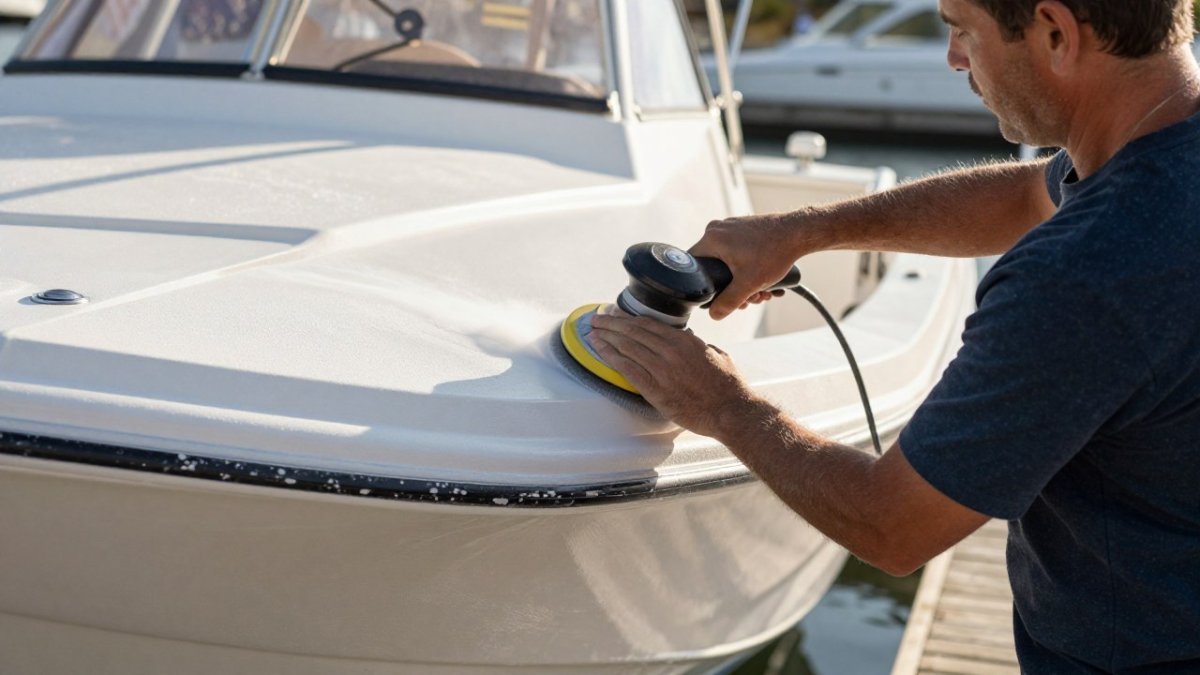
For most boat owners, a hull needs a full polish once or twice a year, with a light refresh of wax or sealant every three to four months. Boats kept in the water, especially in warm, sunny, or salty areas, usually need polishing more often than boats that spend winters on a trailer or in a covered slip. This guide gives you a schedule you can follow.
Polish a boat hull when the gloss fades, the surface feels rough, or water stops beading on the gelcoat. Those signs tell you the finish is losing its protection. A regular schedule keeps the job small and prevents the heavy oxidation that takes hours to remove.
Frequency by boat usage and storage
Use this table as a starting point, then adjust for your conditions.
| Boat Usage | Storage | Polish Frequency | Wax or Sealant |
|---|---|---|---|
| Weekend use, freshwater | Covered slip or shed | Once a year | Every 4-6 months |
| Frequent use, freshwater | Open slip or mooring | Twice a year | Every 3-4 months |
| Frequent use, saltwater | Open slip or mooring | Two to three times a year | Every 2-3 months |
| Seasonal use | Trailer, stored in sun | Once before each season | Every 3 months |
| Daily or commercial use | Open water | Quarterly | Monthly |
Expect to polish more often in hot climates, where UV rays break down the protective layer faster. Owners in hot, sunny regions often reapply wax every few months, while boats in cooler northern lakes can go longer between sessions.
Polishing vs. Waxing vs. Compounding: What Each Does
These three steps are often mixed up, but each does a different job. Compounding removes the most material and is for heavy damage. Polishing refines the surface and restores gloss. Waxing or sealing adds a protective layer on top. The order matters: you cut first, refine second, and protect last. Skipping the refine step leaves swirl marks, and skipping the protect step means the polish you just paid for oxidizes within weeks.
- Compounding: Uses a coarse abrasive to cut through heavy oxidation and deep scratches. Think of it as sanding with a very fine grit suspended in a liquid. It removes a measurable layer of gelcoat, so it is a restoration tool, not a maintenance step.
- Polishing: Uses a finer abrasive to smooth the surface and bring back shine. A polish removes far less material than a compound and is the step most owners actually need once or twice a year.
- Waxing or sealing: Adds a protective barrier against sun and water. Wax and sealant do not restore gloss on their own; they lock in the gloss you created with the polish.
Abrasive grades and pads
Compounds are sold in heavy, medium, and light cuts, and polishes in medium and finishing grades. Match the cut to the damage: heavy cut for chalky, oxidized gelcoat, medium cut for dull but intact surfaces, and a finishing polish for the final gloss pass. Pad choice matters as much as the liquid. A wool or heavy-cut foam pad generates more friction and cuts faster; a soft finishing foam pad spreads the polish evenly and leaves a haze-free surface. Using a heavy-cut pad with a finishing polish is a common mistake that produces swirls instead of shine.
The gelcoat-thickness trade-off
Gelcoat is a thin layer, often measured in thousandths of an inch, and every compound pass removes some of it. That is why compounding belongs in restoration work, not routine care. A boat that is compounded every season will eventually thin the gelcoat to the point where the underlying laminate shows through, and at that stage no polish will bring the color back, only a re-gelcoat or paint job will. Polishing removes far less material per pass, which is why it can be part of a regular schedule while compounding cannot.
How the three steps fit a real schedule
Most owners only need polishing and waxing. A typical annual cycle looks like this: wash and decontaminate, polish with a medium-cut pad and finishing polish, then seal with wax or a synthetic sealant. Compounding enters the picture only when the surface is chalky, scratched, or badly oxidized, often on a boat that has been neglected for several seasons or bought used. After a compound pass, always follow with a polish, because the compound leaves a micro-scratched surface that needs refining before it will hold a shine.
Watch out: letting a dual-action polisher sit in one spot, or running it at high speed on a sharp edge, can burn through the gelcoat in seconds. Keep the pad moving, tape off edges and hardware, and work in small sections so you can see the surface change before it is too late.
Signs Your Hull Needs Polishing Now
Watch for these warning signs:
- Water no longer beads on the surface
- The hull looks chalky or dull when wet
- A white residue rubs off on a dry cloth
- Scuffs and light scratches stay visible after washing
- The color looks faded compared to the waterline or deck
A simple test helps. Splash water on the hull. If it spreads flat instead of forming beads, the protective layer has worn thin. Polish soon, before the oxidation deepens.
How Sun, Salt Water, and Climate Change Your Schedule
Sun is the biggest factor. UV light breaks down gelcoat and wax, so a boat in direct sun all day needs more frequent care than one in shade. Salt water adds another layer of wear, because salt crystals dry on the surface and scrape the finish each time the boat is rinsed.
Climate matters too. Humid regions speed up mildew and grime buildup, while dry, hot areas bake the gelcoat and speed oxidation. Count these conditions when you plan your schedule, and shorten the interval if your boat faces more than one of them.
How to Restore Faded Gelcoat and Remove Oxidation
Restoring faded gelcoat takes patience, but the steps are straightforward:
- Wash the hull with a marine-safe soap to remove salt, dirt, and grime.
- Test a small area with a light polish to see how the gelcoat responds.
- Apply compound with a dual-action polisher on a medium-cut pad, working in small sections.
- Follow with a finishing polish on a soft pad to restore gloss.
- Wipe away residue and inspect the surface under good light.
- Protect the finish with wax or sealant.
Work in sections about two feet square. Keep the polisher moving, and wipe the surface often so you can see your progress. Watch out: letting the polisher sit in one spot can burn through the gelcoat. If you find scratches or damage during the process, see how to fix gel coat scratches step by step.
Removing boat hull oxidation before you polish
Oxidation has to be removed before a polish will work. Start with a compound on heavy chalking, then move to a finishing polish. If the oxidation is deep, multiple passes may be needed. If the gelcoat is already thin or cracked, you may need professional help.
How Often to Wax a Boat Between Polishing Sessions
Wax or sealant is the protection layer that makes polishing last. Carnauba wax gives a warm, deep shine and lasts a few months. Synthetic sealants generally last longer. Ceramic coatings can last longer still but typically require careful prep.
As a general rule, reapply wax every three to four months in sunny or saltwater conditions, and every six months in milder ones. Check the beading test each time you wash. When water stops beading, it is time to wax again.
Choosing Your Polishing Schedule and Next Step with Marine Coat One
Start by matching your boat to the frequency table above. Set a calendar reminder for your main polish, plus a second reminder for the wax refresh. Keep a short log of each session so you can see how fast your hull fades and adjust the schedule over time.
If your gelcoat is already faded or scratched, a restoration pass is the right first step before you set a schedule. Visit the Marine Coat One website to browse our gel coat products and find the right fit for your boat. For current pricing or help choosing, contact us directly for a quote, since costs depend on the product and quantity.
Frequently Asked Questions
How often should you polish a boat hull?
Most boat owners polish a hull once or twice a year, with a light polish or wax every three to six months for boats used regularly in sun or salt water. Boats kept under cover or used only a few weekends a season can often go a year or more between polishing sessions. Usage, storage, and sun exposure matter more than the calendar, so inspect the gelcoat each spring and after long exposure seasons. If water beads poorly or the surface looks dull, it is time to polish, regardless of how long it has been.
Can you polish a boat too often?
Yes. Polishing removes a thin layer of gelcoat each time because it uses abrasives to level the surface. Over-polishing on a heavily used boat can thin the gelcoat and reduce its protection, especially around edges and the waterline. Using a finer polish, a lighter pad pressure, and a protective wax or sealant between sessions lets you keep the shine with fewer cuts into the surface.
How often should you wax a boat compared with polishing it?
Wax is a protective layer that sits on top of the gelcoat, while polishing levels the surface to remove oxidation and light scratches. Many owners wax every three to four months during the boating season and polish only when the gelcoat looks dull or oxidized, often once a year. Waxing more often keeps water beading and UV protection strong, which reduces how often you need to polish.
Does a boat kept in the sun need polishing more often?
Yes. Constant UV exposure breaks down the gelcoat faster, so boats that sit uncovered in full sun often oxidize within months. Check these boats every few months, and plan a polish at least once a year, with wax or sealant applied more frequently. Covered storage or a fitted cover can extend the interval considerably.
